
Welcome to four Postdoctoral Fellows and Researchers
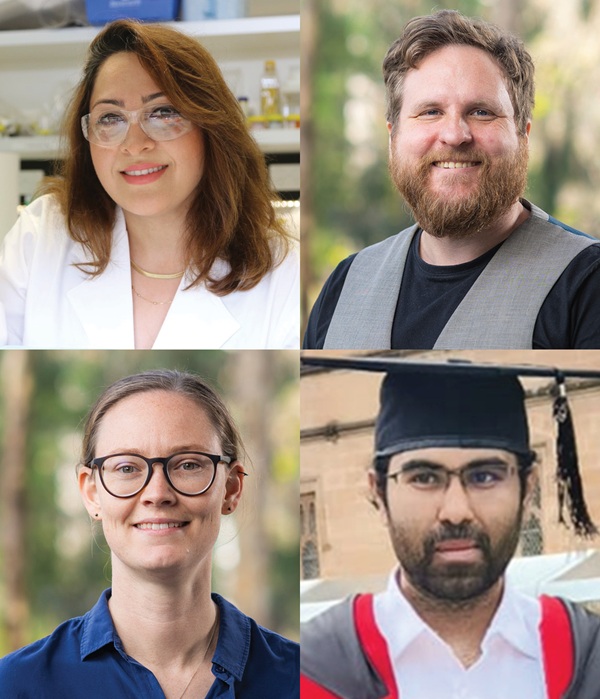
MOBIUS is delighted to welcome four Postdoctoral Fellows and Researchers. We look forward to their exciting innovations in biosensors!
Meet the researchers:
Dr Azadeh Nilghaz
Dr Azadeh Nilghaz, Research Fellow, is working with Professor Nicolas Voelcker at Monash University, in the Monash Pharmacy and Pharmaceutical Sciences Faculty and Monash Institute of Pharmaceutical Sciences.
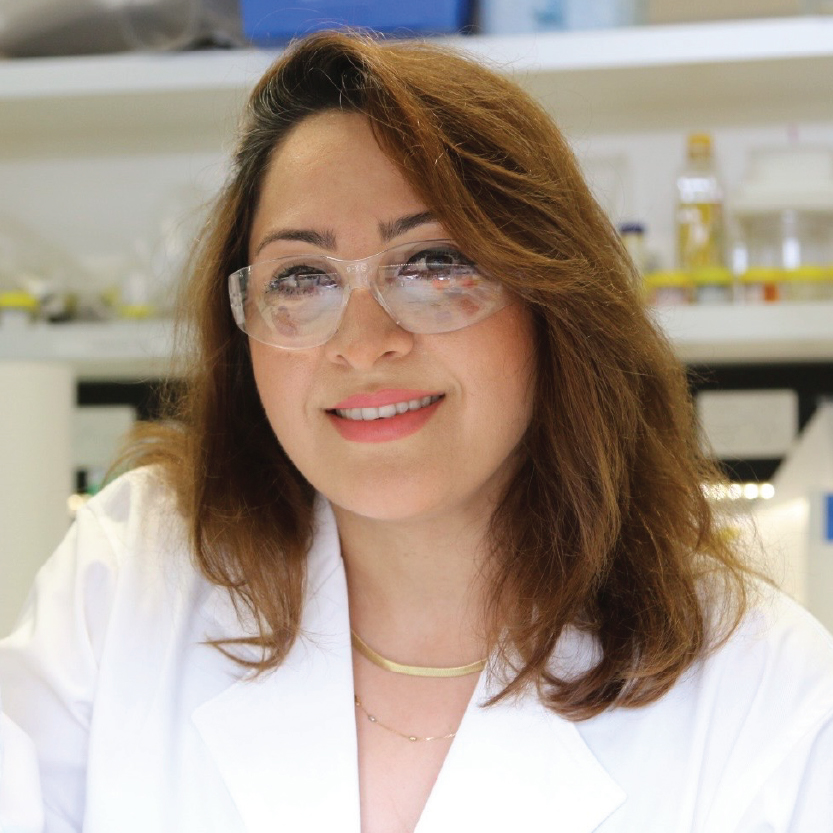
With a Master’s degree in Biomedical Engineering and a PhD in Chemical Engineering, she brings extensive interdisciplinary research experience in microfluidics, nanobiosensors, and organ-on-a-chip systems. Her expertise spans sensor fabrication, surface chemistry, nanomaterials, and translational research.
Azadeh’s most recent projects include developing a wearable potassium and sodium sensor platform to monitor electrolyte imbalance and dehydration in real time.
“My passion lies in engineering smart, accessible biosensors that can be deployed in real-world settings—from wearable health monitoring to remote and underserved communities,” she says. “I am looking forward to working with industry in MOBIUS to develop cutting-edge biosensors for point-of-use and wearables.”
Dr Daniel Langley
Dr Daniel Langley joins us as a Senior Postdoctoral Fellow at the La Trobe Institute for Molecular Science (LIMS) and the School of Agriculture, Biomedicine and Environment, La Trobe University.

His career has spanned academia and industry including microfluidics at SCHOTT MINIFAB, growing human skin at CSIRO, electrochemical biosensors at Universal Biosensors, and diamond based room temperature quantum computing at Quantum Brilliance.
“I have realised on my journey through academia and industry that, often, we can overcome barriers to success by understanding the different ‘languages’ that we each use in our everyday work,” explains Daniel.
“For example, in academia, I have learned to combine the languages of chemistry, physics and biology. Since shifting full time to industry in 2020, I have been building my fluency in business. This experience has enabled me to connect the dots between people in both academia and industry, and drive better partnerships that generate value for everyone.”
“Now, I am excited to join MOBIUS and work with a diverse and talented team on turning cutting edge discoveries into something tangible that actually makes life easier,” says Daniel.
Dr Gemma Zerna
Dr Gemma Zerna is a Postdoctoral Researcher in the the School of Agriculture, Biomedicine and Environment, La Trobe University.
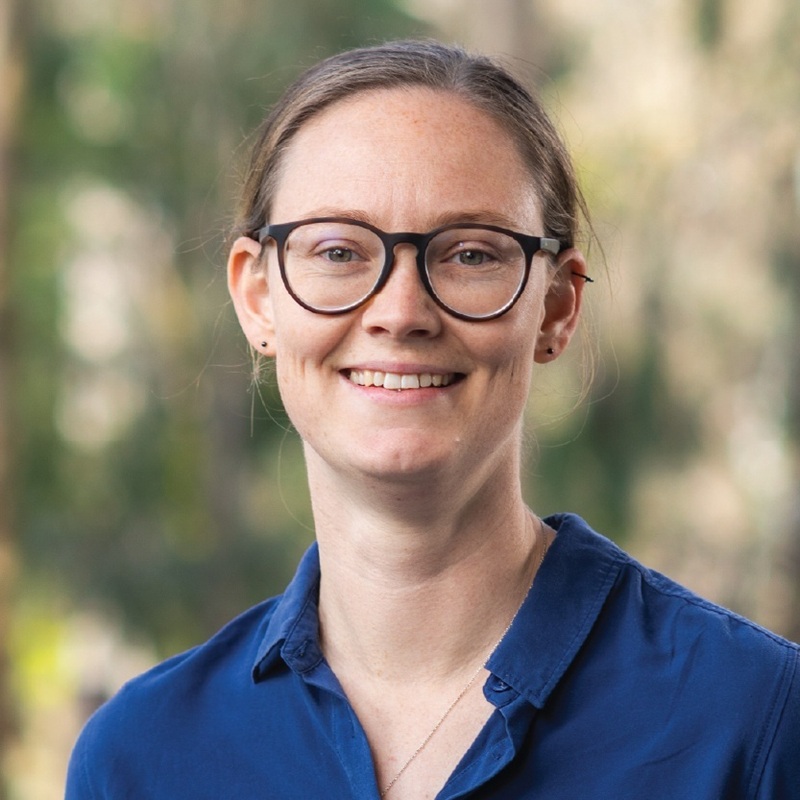
“I am a molecular biologist, with a focus on disease identification and prevention, including DNA isolation and assay development,” says Gemma.
Understanding disease biology is critical to developing accurate and reliable sensors—for example, ensuring that the sensor detects molecules that have diagnostic relevance.
“I am excited to work in MOBIUS in a cross-disciplinary project which draws on two key disciplines needed for success: molecular biology and electrochemistry,” adds Gemma. “I get to see how my skills and expertise can be applied in the electrochemistry world, and learn about a scientific field that I do not have background knowledge in.”
“I also love working on projects that have a real-world application. It is very rewarding to start from a concept and develop a working prototype, or even a product, that could ultimately benefit diverse industries including defence, agriculture, biosecurity, and healthcare.”
Dr Ronil Rath
Dr Ronil Rath, Postdoctoral Researcher, is working with Dr Saimon Moraes Silva at La Trobe University, in the La Trobe Institute for Molecular Science (LIMS) and the School of Agriculture, Biomedicine and Environment, La Trobe University.
Ronil completed his PhD at the University of Sydney in 2024, where he focused on developing a gas sensor array for the simultaneous detection of multiple gases.
“I use a multidisciplinary approach to bridge materials science, electrochemistry, and real-world application, specialising in material design and selection for gas and enzymatic sensors,” explains Ronil.
For example, he draws on advanced fabrication techniques, such as 3D printing, to develop low-cost but highly effective sensors tailored for food safety and medical diagnostics.
“I love the process of turning complex scientific ideas into tangible technologies that can improve lives,” says Ronil. “Whether it is mentoring students or collaborating with colleagues, I find joy in the intersection of curiosity, creativity, and working towards a purpose.”
“MOBIUS gives me the opportunity to work and collaborate with many outstanding researchers in the field of sensors—it will help me to grow, learn, and understand how to translate sensor technology from the lab to a real-world product.”