
Portable biosensor could detect PFAS ‘forever chemicals’ on site
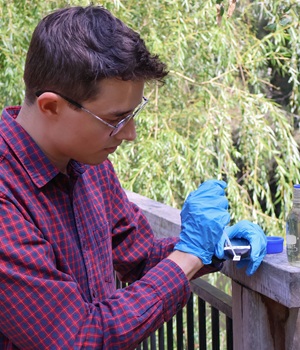
A team led by MOBIUS researcher, Dr Saimon Moraes Silva (La Trobe University), has developed a portable biosensor that may allow rapid, on-site detection of toxic “forever chemicals” in water, removing the need for samples to be sent to specialist laboratories.
The device is designed to detect per- and polyfluoroalkyl substances (PFAS), a group of more than 15,000 synthetic chemicals used in products such as firefighting foams, food packaging and stain-resistant fabrics.
PFAS are highly persistent in the environment and have been linked to serious health risks, including cancer. Specifically, the sensing device detects PFOA (perfluorooctanoic acid), which is among the most regulated PFAS.
Led by PhD student Henry Bellette and MOBIUS’ Dr Saimon Moraes Silva, Director of La Trobe’s Biomedical and Environmental Sensor Technology (BEST) Research Centre, the research has been published in the journal ACS Sensors.
Dr Moraes Silva said portable screening tools would play an important role in managing long-term contamination.
“A portable screening tool could allow more frequent testing, particularly in regional and remote areas, and help identify where more detailed laboratory analysis is needed,” he says.
The researchers hope the technology can eventually be incorporated into a hand-held device for environmental monitoring and water screening.
Read more on the La Trobe University media release.
The research was conducted by the La Trobe Institute for Molecular Science (LIMS), La Trobe University’s Biomedical and Environmental Sensor Technology (BEST) Research Centre, and the School of Agriculture, Biomedicine and Environment, La Trobe University.
The research was also featured in media including Manufacturer’s Monthly, the National Tribune, and the Toorak Times.