
New accurate and selective methane sensor
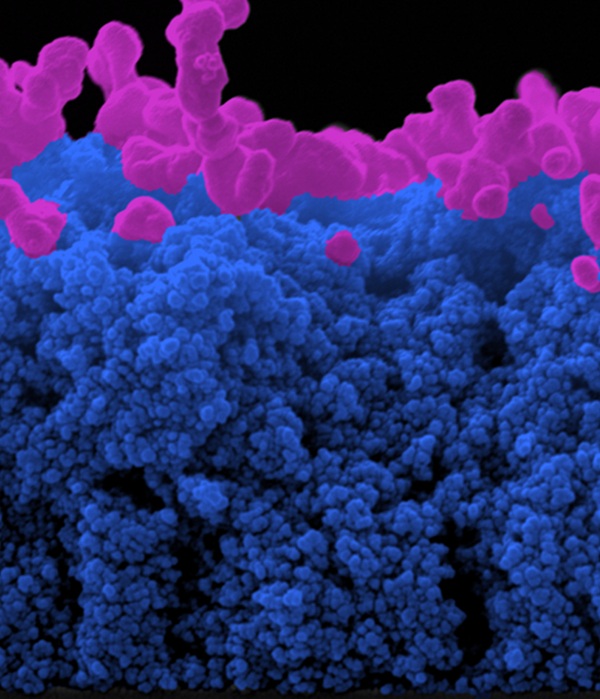
Hot off the press: a new methane sensor developed by Reza Behboodian and MOBIUS researchers Professor Noushin Nasiri and Dr Jayden Chen (Macquarie University), partner investigator Dr Bronwyn Darlington (Agscent), and collaborators!
Accurate methane detection is important for agriculture and greenhouse-gas monitoring, early leak detection, public and workplace safety, and smarter waste and energy management.
“Unfortunately, many conventional methane sensors can struggle to distinguish methane from interfering gases such as hydrogen, particularly at low methane levels,” says lead researcher, Professor Noushin Nasiri.
To overcome this challenge, the team modified a metal-oxide sensor with an advanced porous, cage-like material called a metal-organic framework (MOF).
“The MOF, called ZIF-8, attracts and concentrates methane molecules near the sensing surface,” explains Noushin. “The sensing surface is coated with palladium-modified tin oxide, which supports the chemical reactions needed to detect methane.”
Importantly, this approach means the sensor responds more selectively to methane than hydrogen—unlike many conventional sensors—and can detect methane at concentrations below the lower explosive limit.
“Our research provides a new strategy for designing more selective methane sensors,” says Noushin. “It could lead to future methane-monitoring networks for industrial facilities, energy infrastructure, environmental monitoring, livestock management, and smart green cities.”
Read more.
Image: The materials at a microscopic scale, showing the MOF in purple and the metal-oxide sensor surface in blue.