
Invisible material could revolutionise smart and wearable tech
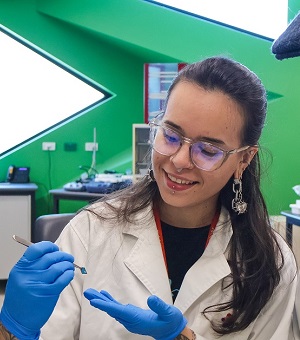
A team led by MOBIUS researcher, Associate Professor George “Wren” Greene (La Trobe University), has produced a new, powerful electricity-conducting material which could revolutionise smartphones and wearable technologies like medical devices.
The new technique uses hyaluronic acid, well known due to its popularity in skincare, applied directly to a gold-plated surface to create a thinner, more durable film, or polymer, used to conduct electricity in devices like biosensors.
Wren said the technique could lead to major improvements in the function, cost and useability of devices like touchscreens and wearable biosensors.
Fantastic work, Wren, Saimon M. Silva, Luiza Aguiar do Nascimento and team!
Read the article.
The research was conducted by the La Trobe Institute for Molecular Science (LIMS), La Trobe University’s Biomedical and Environmental Sensor Technology (BEST) Research Centre, and the School of Agriculture, Biomedicine and Environment, La Trobe University.
This research was also featured in Cosmos, The New Daily, Electronics Online, Science Magazine, and The Brighter Side.